A tale of one city split apart – Historic Northville

July 15, 2026 PLYMOUTH VOICE.
Plymouth Michigan News
By: Don Howard
This isn’t about citizens verses City Hall.
This is about neighbors who all love Northville but have fundamentally different visions of what its historic downtown should be. One side sees a walkable civic gathering place, the other sees public streets that belong to everyone and should remain open except for temporary events.
The Northville street-closure dispute is about much more than whether cars should drive down Main Street. It has become a debate over how much authority a city government has to permanently change the use of public streets without following specific legal procedures. What began as a popular COVID-era experiment evolved into one of the most closely watched municipal legal battles in Michigan.
In the spring of 2020, Northville closed portions of Main Street and Center Street to vehicle traffic. Like many downtowns across the country, the goal was to help restaurants and retailers survive the pandemic by allowing outdoor dining and creating more space for pedestrians.
The experiment proved popular with many residents. Outdoor patios flourished, festivals expanded, and downtown took on the feel of a pedestrian plaza.
As the pandemic ended, many residents expected the streets to reopen permanently.
Instead, the City Commission voted to continue closing the streets every spring and summer, eventually installing retractable bollards and other infrastructure that made the closures easier to implement each year. City officials argued that the pedestrian district had become an important economic development tool that increased downtown activity, improved pedestrian safety, and supported restaurants and retailers.
Northville residents appear to be genuinely divided, and the issue has become one of the most contentious local debates the city has seen in decades. There is no clear evidence that either side represents an overwhelming majority.
Many residents supported that policy through their elected officials. At the same time a lawsuit attracted substantial financial backing and volunteer support, an indication that opposition was also significant.
Not everyone agreed and feelings ran strongly on both sides.
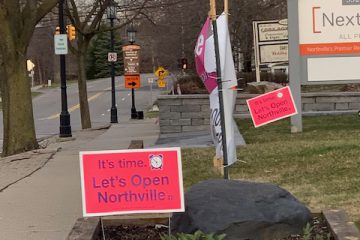
A grassroots organization called Let’s Open Northville formed, arguing that the streets belong to everyone, claiming only a handful of businesses benefited and that the city lacked legal authority to close public streets indefinitely. The group emphasized that they were not opposed to temporary closures for parades, festivals and special events, but believed seasonal closures lasting months at a time violated Michigan law.
Opponents of the closures, including the non-profit Let’s Open Northville, argue that Main and Center are major public thoroughfares that should remain open and that traffic has been diverted onto residential streets, some businesses have lost drive-by customers and the City exceeded its legal authority by closing public streets for months at a time. Their arguments ultimately persuaded a Wayne Count trial court judge, who ruled in 2025, that the long-term seasonal closures violated Michigan law.
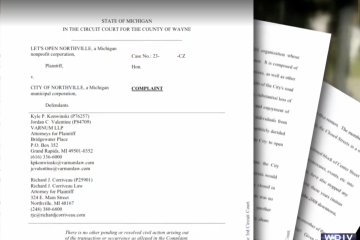
In October 2023, Let’s Open Northville filed suit in Wayne County Circuit Court, alleging that the City Commission exceeded its authority by effectively converting public streets into pedestrian plazas without using the legal process required to permanently alter public rights-of-way.
After nearly two years of litigation, Judge Charlene Elder ruled in July 2025 in favor of Let’s Open Northville stating the continued seasonal closures no longer had a sufficient governmental purpose after the pandemic; the city’s actions were arbitrary; Main and Center Streets had been dedicated to public travel for more than 180 years; the streets could still be closed for traditional events such as parades and festivals, but not for months at a time simply to support outdoor dining.
The judge ordered the streets reopened to vehicle traffic.
The City appealed, arguing that elected officials—not the courts—should decide how municipal streets are used and that the closures have enhanced downtown vitality, public safety, and economic development.
The City has also maintained that it will comply with court orders while seeking appellate review.
According to the latest developments, the Michigan Court of Appeals has denied the City’s requests for a stay pending appeal, meaning the lower court’s order requiring the streets to remain open stays in effect while the appeal proceeds.
The dispute has become a test case that could influence municipalities across Michigan. At its core, the question is not simply whether pedestrian streets are desirable. It is whether a city may repurpose major public streets for extended periods through policy decisions alone, or whether state law requires a more formal legal process before changing the long-established use of public rights-of-way.
The legal question provides a compelling backdrop to a broader story about competing visions of downtown life: one side sees a vibrant, walkable public square that has revitalized Northville, the other sees an unlawful restriction on public streets that has disrupted neighborhoods, traffic patterns, and equal access to property.
That tension—between civic vision and legal authority—is what has made the Northville street controversy one of the hottest local government cases in the state.
Plymouth Voice.